
If you’re asking is online tutoring safe, you’re probably thinking about more than academics. You’re thinking about who will be teaching your child, how lessons are managed, and whether online support is truly something you can trust.
That concern is completely reasonable. Parents are not just looking for better grades. They are looking for safe, reliable, high-quality support that helps their child learn with confidence.
The good news is that online tutoring can be both safe and highly effective when it is delivered properly. With the right tutor, the right systems, and the right parent visibility, it can become one of the most supportive and flexible ways for children to learn.
This guide will show you what safe online tutoring really looks like, what to check before booking, and how to choose support that feels secure, worthwhile, and genuinely helpful for your child.
Is Online Tutoring Safe? A Quick Answer
Yes, online tutoring can absolutely be safe for children when the right safeguards are in place.
What matters most is not just the fact that lessons happen online. It is who the tutor is, how the sessions are managed, and whether parents can trust the process from start to finish.
From a teaching perspective, children make the most progress when they feel both comfortable and supported. A child who feels safe is more likely to ask questions, stay engaged, and build confidence over time.
That is why the strongest tutoring setups do not just focus on teaching. They also focus on:
- child safety
- parent communication
- clear boundaries
- lesson quality
- consistent support
So the better question is not just, “Is online tutoring safe?”
It is:
“Is this tutoring safe, structured, and worth trusting with my child?”
That is the question good tutoring providers should be ready to answer clearly.
Why More Parents Are Choosing Online Learning for Kids
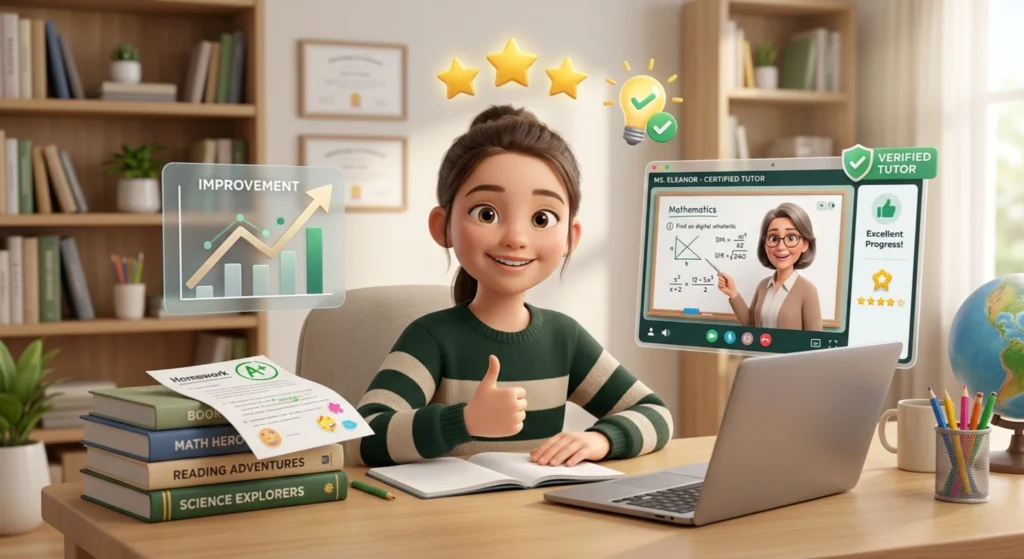
Online tutoring has grown quickly because it solves real problems for families. It is not just a convenient option anymore. For many children, it has become a genuinely effective way to learn.
Flexibility for busy families
One of the biggest reasons parents choose online learning for kids is flexibility.
When tutoring fits around school, family schedules, and home routines, children are more likely to attend consistently. And in education, consistency matters more than intensity. Regular support often leads to stronger improvement than occasional rushed sessions.
Easier access to better tutors
Online tutoring gives families access to tutors they might never have found locally.
That matters because tutor fit has a huge impact on outcomes. A qualified tutor who understands your child’s age, learning style, and academic level can make a noticeable difference in both confidence and performance.
In practice, parents often see progress not because a tutor is “strict” or “advanced,” but because the tutor explains clearly, notices weak areas early, and teaches in a way the child actually responds to.
A more comfortable learning environment
Children often learn better when they feel relaxed.
Many tutors notice that students who are quiet in school become much more willing to speak up at home. They ask more questions, make fewer anxious mistakes, and settle into learning more naturally.
That comfort can improve:
- focus
- confidence
- lesson participation
- long-term progress
When online tutoring is safe and well managed, that familiar environment becomes a real advantage.
What Makes Online Tutoring Safe for Children
Safe tutoring is not based on vague promises. It is based on clear systems, trustworthy adults, and transparent support.
Parents should never feel like they are expected to “just trust it.” Good tutoring providers make safety visible.
Verified and qualified tutors
A safe tutoring experience starts with the tutor.
Parents should know:
- who the tutor is
- what they teach
- what experience they have
- whether they are suitable for working with children
From an education point of view, subject knowledge alone is not enough. A tutor can know a topic well and still struggle to teach it appropriately to a child.
Strong tutors usually bring more than content knowledge. They bring:
- age-appropriate communication
- patience
- professionalism
- lesson structure
- the ability to build confidence without pressure
This is where real quality begins. Children do not improve just because someone is “good at maths” or “fluent in English.” They improve when the tutor knows how to teach in a way that feels clear, calm, and supportive.
Safe online tutoring platforms
The safety of online tutoring platforms matters just as much as the person teaching.
A safe system should make it easy for parents to understand:
- where lessons take place
- how sessions are accessed
- how communication is managed
- how concerns can be raised
- what level of parent visibility is available
This structure matters more than many parents realise.
When tutoring happens through organised systems rather than scattered links and informal messaging, there is usually more accountability, more clarity, and less room for confusion.
That does not mean every private tutor is unsafe. But it does mean that strong platforms tend to make safe practice easier to maintain consistently.
Parent visibility and involvement
Good tutoring should support children, not isolate them from their parents.
Parents should be able to:
- understand how lessons work
- know when sessions happen
- review progress
- ask questions
- stay involved when needed
That level of visibility builds trust. It also helps parents feel confident that support is not just happening, but happening well.
A child does not need constant supervision to be safe. But parents should never feel shut out.
Clear communication boundaries
This is one of the most important signs of a safe tutoring environment.
Tutors should communicate in a way that is:
- professional
- respectful
- lesson-focused
- appropriate for the child’s age
Parents should be cautious if communication becomes:
- overly personal
- hidden from parents
- too casual too quickly
- unrelated to learning
Experienced tutors understand that strong rapport is important, but so are boundaries. In fact, clear boundaries often make children feel more secure, not less.
Child-friendly lesson environments
Children learn best when lessons feel emotionally safe as well as academically useful.
That means sessions should feel:
- calm
- structured
- respectful
- age-appropriate
- encouraging
As teachers often observe, a child’s comfort level affects everything. If a child feels rushed, embarrassed, or uneasy, learning slows down quickly.
On the other hand, when a child feels listened to and supported, they are much more likely to stay engaged and improve steadily.
That is one reason why safe tutoring is not separate from effective tutoring. In many cases, they go hand in hand.
Online Classes Safety: What Parents Should Check Before Booking
If you want a practical way to assess online classes safety, start with a checklist before your child begins.
This helps parents move from worry to clarity.
Safety checklist for parents
Before booking online tutoring, check whether you can confidently answer yes to the following:
- Is the tutor verified or screened?
- Are their qualifications or experience clearly explained?
- Is the learning platform secure and easy to understand?
- Is parent communication welcomed?
- Are lesson boundaries clear?
- Is there a supervised trial class available?
- Can you raise concerns easily if needed?
- Does the setup feel professional rather than improvised?
A safe service should make these answers easy to find.
When important details feel unclear, parents often sense that before they can explain it. That instinct is worth listening to.
Questions to ask before your child starts
A few simple questions can tell you a lot about the quality and safety of a tutoring setup:
- How do you keep sessions safe for children?
- How do tutors communicate with students and parents?
- Can parents observe the first class if needed?
- What happens if a child is not comfortable with the tutor?
- How is progress shared with families?
- What should I expect from the trial class?
These are not difficult questions. Any provider that values parent trust should be able to answer them comfortably.
Parent Concerns About Online Tutoring and How to Handle Them
Most parents are not just asking whether tutoring works. They are asking whether it is safe, worthwhile, and genuinely right for their child.
Those concerns deserve direct answers.
“Who is teaching my child?”
This is often the first and most important question.
Parents should never feel like they are placing their child with someone they know almost nothing about.
A trustworthy setup should make it clear:
- who the tutor is
- what they teach
- what experience they have
- how they support student progress
This matters not only for safety, but for results too. A child is far more likely to improve with a tutor who understands both the subject and the student.
“Can I trust online communication?”
Yes, if the communication is structured properly.
Children should not be left navigating adult educational relationships on their own. Safe tutoring keeps communication clear, appropriate, and parent-aware.
That level of transparency often reassures parents immediately because it shows the service is built around accountability, not convenience alone.
“What if my child feels uncomfortable?”
This is one of the biggest parent fears, and it should be taken seriously.
Children do not always say, “I feel uncomfortable.” Sometimes it comes out as:
- avoiding lessons
- becoming quiet before class
- saying they “just don’t like it”
- losing confidence unexpectedly
Good tutors usually notice emotional discomfort early. Good parents ask gentle follow-up questions instead of assuming it is only about motivation.
A useful check-in might sound like:
- “Did you feel comfortable asking questions today?”
- “Did your tutor explain things in a way that helped?”
- “Was there anything you didn’t like about the lesson?”
These small conversations build trust and help parents spot issues before they become bigger ones.
“Will my child actually make progress online?”
This is one of the most common objections, and it is a valid one.
The answer is yes –children can make very strong progress online when the tutoring is well structured and the tutor is a good fit.
In real teaching practice, progress usually comes from:
- clear explanations
- regular attendance
- personalised support
- confidence building
- targeted feedback
Children do not improve because a lesson happens on a screen or in a room. They improve because the teaching is responsive, focused, and consistent.
That is why quality matters more than format.
Benefits of Safe Online Tutoring for Students
When tutoring is safe and well matched, it can support much more than homework.
It can help children learn with more confidence and less pressure.
More confidence in learning
Many children know more than they show in class.
One-to-one tutoring gives them space to ask questions without worrying about being wrong in front of others. Over time, that often leads to one of the most important academic changes a child can make:
They stop hiding confusion.
That is where real improvement often begins.
Better focus in a familiar environment
Some children feel more settled learning at home than they do in a busy classroom or tuition centre.
That can improve:
- participation
- concentration
- willingness to try
- lesson consistency
For students who are shy, anxious, or easily overstimulated, that comfort can make a real difference.
Personalised support at the right pace
This is where strong tutoring often produces visible results.
An experienced tutor can:
- slow down when needed
- identify gaps quickly
- adjust explanations
- challenge a child at the right level
That means children are not just “doing more work.” They are receiving support that is more relevant, more targeted, and often more effective.
Clearer learning outcomes over time
Parents often want to know what tutoring should actually lead to.
While every child progresses differently, safe and high-quality tutoring should gradually support:
- stronger understanding
- better classroom confidence
- improved homework independence
- more accurate answers
- more consistent academic habits
Those are meaningful learning outcomes, especially when they build steadily rather than artificially.
Benefits of Online Tutoring for Parents
Safe tutoring should not only help the child. It should also make life easier and clearer for parents.
More visibility into your child’s progress
Parents often feel more reassured when they understand what is improving and what still needs work.
A good tutoring setup should help you see:
- what your child is learning
- where they are gaining confidence
- what still needs reinforcement
That kind of visibility builds trust because it turns tutoring into something you can understand, not just pay for.
Less travel and more convenience
This may seem practical, but it also affects long-term value.
When support is easier to attend, families are more likely to stay consistent. And consistency is one of the biggest reasons tutoring delivers better outcomes.
Greater peace of mind
This is one of the most valuable benefits, even if parents do not always say it directly.
When your child feels comfortable, your questions are answered, and the learning feels organised, tutoring stops feeling uncertain and starts feeling supportive.
That peace of mind matters.
How to Monitor Online Classes Without Hovering
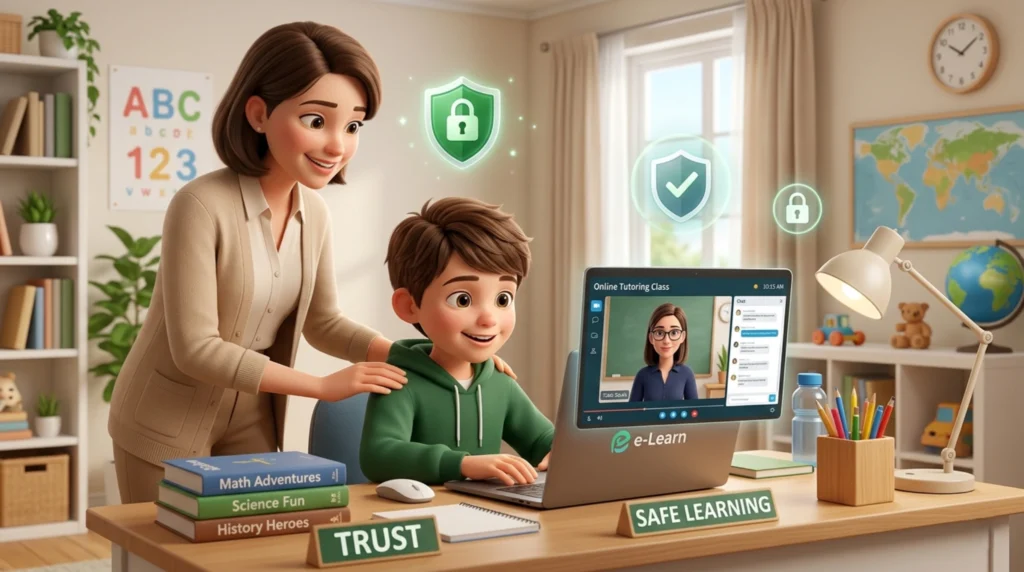
Many parents want to know how to monitor online classes without making their child feel watched all the time.
That is a healthy instinct. Children need support, but they also need space to grow.
Set up learning in a visible space
A quiet, sensible learning space is usually enough.
Lessons do not need to happen in the middle of household noise, but they also should not feel completely hidden from the family environment, especially in the early stages.
This small choice often improves both:
- safety
- focus
Stay involved without interrupting
You do not need to supervise every second of the lesson.
Instead, stay aware of:
- when sessions happen
- how your child feels before and after class
- whether the tutor seems organised and professional
- whether the learning feels consistent
This kind of quiet involvement often works better than constant observation.
Review progress regularly
One of the best ways to judge tutoring quality is to look at progress over time.
Ask:
- Is my child more confident than before?
- Are weak areas becoming clearer or stronger?
- Is the tutor helping rather than just “keeping them busy”?
- Does my child seem supported rather than pressured?
These questions help parents assess both quality and value.
Know what healthy tutor-child interaction looks like
A strong lesson usually includes:
- clear explanation
- patient correction
- focused discussion
- encouragement without pressure
- respect for the child’s pace
It should not feel overly personal, confusing, or emotionally intense.
Safe tutoring should feel professional, warm, and calm.
Common Mistakes Parents Make When Choosing Online Tutoring
Parents often choose support while under pressure. Their child may already be behind, frustrated, or lacking confidence.
That urgency is understandable, but it can lead to avoidable mistakes.
Choosing based only on price
Value matters, but cheapest is not always best.
Parents are not just paying for time. They are paying for:
- quality of teaching
- structure
- consistency
- trust
- support
A lower-cost option can still be excellent, but only if the standards are clear.
Skipping the trial class
A trial class is one of the best ways to reduce uncertainty.
It allows parents to observe:
- how the tutor explains
- how the child responds
- whether the lesson feels safe and structured
- whether the support feels worth continuing
This is often where confidence begins. It is much easier to make a good decision after seeing the teaching in action.
Not checking how the platform works
Some parents focus entirely on the tutor and overlook the system around the lesson.
But the system affects the experience too.
You should know:
- how lessons are delivered
- how support is provided
- how communication is managed
- how issues are handled if they arise
That practical clarity often makes parents feel more confident before the first class even begins.
Leaving everything to the child
Even older students benefit from some parent awareness, especially early on.
Children are not always the best judges of educational quality. A tutor may seem “nice,” but still not be effective. Or a lesson may feel “boring” simply because the child is being challenged in a useful way.
That is why parent involvement matters. It helps balance emotional comfort with educational value.
Red Flags That Online Tutoring May Not Be Safe
Parents do not need to become suspicious of everything. But they do need to know what to watch for.
Private contact outside approved channels
If communication quickly moves into private or informal spaces, be cautious.
Safe tutoring should not depend on hidden or unstructured contact.
No clear parent communication
If parents cannot easily:
- ask questions
- understand the setup
- review progress
- raise concerns
then the support is too vague.
Transparency is one of the clearest trust signals a tutoring service can offer.
Pressure to commit too quickly
A good service should build confidence, not urgency.
If there is pressure to pay or commit before you feel clear about the process, that is worth noticing.
Vague tutor credentials
Parents should not have to guess why a tutor is suitable.
You should be able to understand what experience they bring and how they help students improve. If that remains unclear, ask more before moving forward.
How to Choose a Safe Online Tutoring Platform
If you want one simple rule, it is this:
Choose structure over uncertainty.
What a trustworthy tutoring provider should offer
A strong tutoring service should offer:
- verified tutors
- clear communication
- age-appropriate teaching
- parent support
- trial classes
- progress updates
- visible safety standards
These are not luxury extras. They are part of what makes support both safe and worthwhile.
Why structured platforms are often safer than informal setups
Many private tutors are excellent. But informal setups can sometimes depend too much on trust without enough process around it.
Structured tutoring providers usually make it easier to maintain:
- consistency
- communication
- oversight
- accountability
- parent reassurance
That often leads to a better overall experience for both families and students.
If you are exploring online tutoring or comparing online classes for students, safety and teaching quality should always be part of the same decision.
Start With a Safe and Supervised First Step
Parents do not need to commit immediately to know whether tutoring is right.
In fact, the best first step is often the least pressured one.
What parents should expect from a trial class
A strong trial lesson should help you assess:
- whether your child feels comfortable
- whether the tutor explains clearly
- whether the pace feels suitable
- whether the lesson feels safe and well organised
It should leave you with more clarity, not more doubt.
That first lesson often tells parents two important things very quickly:
- Can my child learn well with this tutor?
- Can I trust this setup enough to continue?
Both matter.
When to talk to an academic advisor
Sometimes parents know their child needs help, but they are not yet sure what kind of support will work best.
That is exactly when it helps to talk to an academic advisor.
A thoughtful conversation can help you understand:
- what your child needs academically
- what kind of tutor would suit them
- what level of support is appropriate
- how to begin safely and confidently
If you are unsure, you do not need to decide everything alone.
Talk to our team about your child’s safety
Start with a supervised trial class
Those are not pressure steps. They are confidence-building ones.
FAQs
Is online tutoring safe for children of all ages?
Yes, as long as the setup matches the child’s age and needs.
Younger children usually need more parent visibility, while older students may need more independence with continued oversight.
Can parents sit in during online tutoring sessions?
Yes, especially during the first few lessons.
Many parents feel more reassured after observing how the tutor teaches and how their child responds.
How do I know if online tutoring is actually effective?
Look for signs such as:
stronger confidence
better understanding
more consistent homework performance
improved participation
clearer progress over time
Good tutoring should feel useful, not just busy.
Is online tutoring worth the money?
It can be, especially when the tutoring is well matched, consistent, and focused on meaningful progress.
The real value usually comes from:
personalised support
better confidence
targeted improvement
reduced stress for both child and parent
What should I do if something feels off during a lesson?
Pause and follow up early.
Speak to your child, review what happened, and contact the tutor or provider directly if needed. Parents should trust their instincts when something does not feel right.
Conclusion: Safe Online Tutoring Starts With the Right Choice
So, is online tutoring safe?
Yes, it can be – and for many families, it becomes a valuable part of a child’s academic progress and confidence. But safety and results do not come from convenience alone. They come from choosing support that is well structured, professionally delivered, and built around trust.
The best online tutoring does more than help with schoolwork. It gives children a safe place to ask questions, improve steadily, and feel supported. It also gives parents something just as important: clarity, reassurance, and confidence in the learning process.
If you are considering support for your child, start with a step that feels safe and sensible.
Start with a supervised trial class
or
Talk to our team about your child’s safety
That way, you are not just choosing tutoring. You are choosing support you can feel good about.